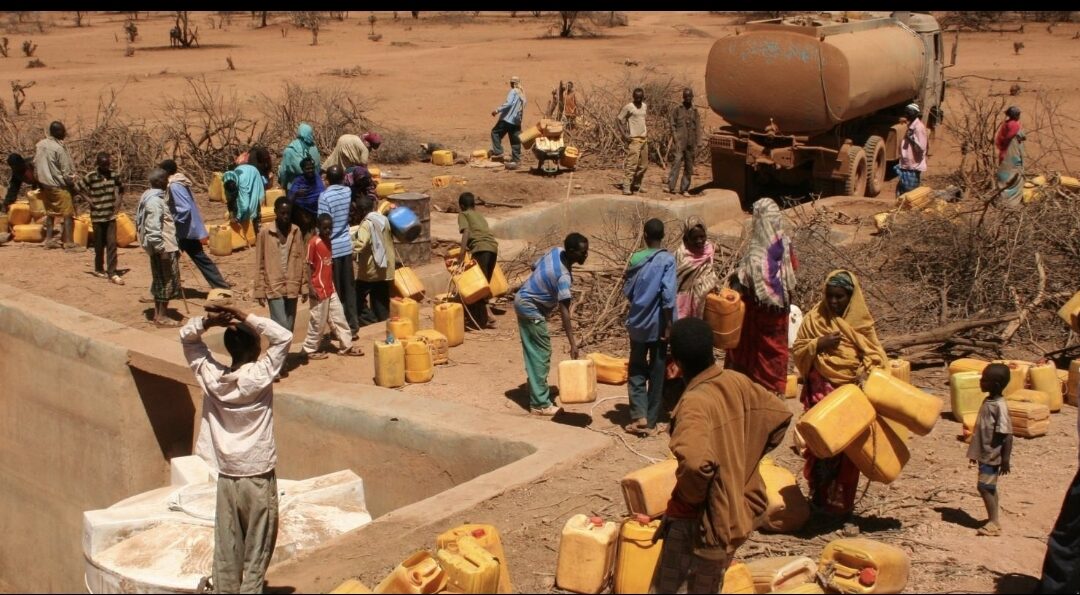


Water scarcity across many African countries continues to represent one of the most pressing challenges to human security and social stability. In vast areas of the Sahel and Sub-Saharan Africa, access to safe drinking water is not consistently guaranteed, and entire communities rely on fragile supply systems often linked to seasonal conditions or emergency interventions.
The causes of this crisis are deep and interconnected. Climate change has intensified the frequency and severity of droughts, reducing water availability. Rapid population growth and weak infrastructure further exacerbate the situation, while in some contexts political instability limits the capacity of states to respond effectively.
A recent request from Mauritania clearly illustrates the concrete dimension of this emergency. Local communities, particularly in rural and desert areas, have expressed an urgent need for a water tanker truck capable of transporting at least fifteen tons of potable water. During the summer months, some regions are left completely without access to water, making long-distance transport across desert terrain essential. The affected populations are facing an immediate and critical need, where water becomes a daily matter of survival.
However, the cost of such equipment represents a significant barrier. Investments of this scale are difficult to sustain for independent initiatives or non-structured organizations, especially in an international context where humanitarian resources are increasingly concentrated on highly visible geopolitical crises.
This situation calls for a broader reflection on intervention models. Water tanker trucks provide a necessary short-term response, capable of saving lives and ensuring minimum survival conditions in the most isolated areas. Nevertheless, they cannot be considered a long-term solution. Water transport involves continuous costs, fuel dependency, and complex logistics, all of which are difficult to sustain over time.
For this reason, alongside emergency responses, it becomes essential to promote structural solutions. The construction of deep wells, the installation of solar-powered pumping systems, and the development of local storage infrastructure represent more sustainable and durable interventions. In many cases, the overall cost of such systems can be comparable to that of a single tanker truck, while generating a far greater and continuous impact.
The challenge, therefore, is not to choose between emergency and development, but to integrate both dimensions into a coherent strategy. Immediate interventions through water tankers can address urgent needs, while parallel efforts must be directed toward building long-term water autonomy for communities.
In an international context marked by rising tensions and a weakening of traditional multilateral mechanisms, there is growing space for pragmatic, credible, and targeted initiatives. Even small-scale interventions, if well designed, can become replicable models and generate meaningful medium-term impact.
Ambassador at Large Alfredo Maiolese, Secretary General of the World Organization of States – International Parliament for Safety and Peace (WOS-IPSP), stated that “requests coming directly from communities, such as the one from Mauritania, remind us that behind every statistic there are real people. Water is not merely a resource, but a fundamental condition of dignity. It is essential to respond to emergencies, while at the same time building solutions that enable communities to become autonomous and resilient over time.”
Water Scarcity in Africa: Between Immediate Emergency and the Need for Sustainable Solutions.